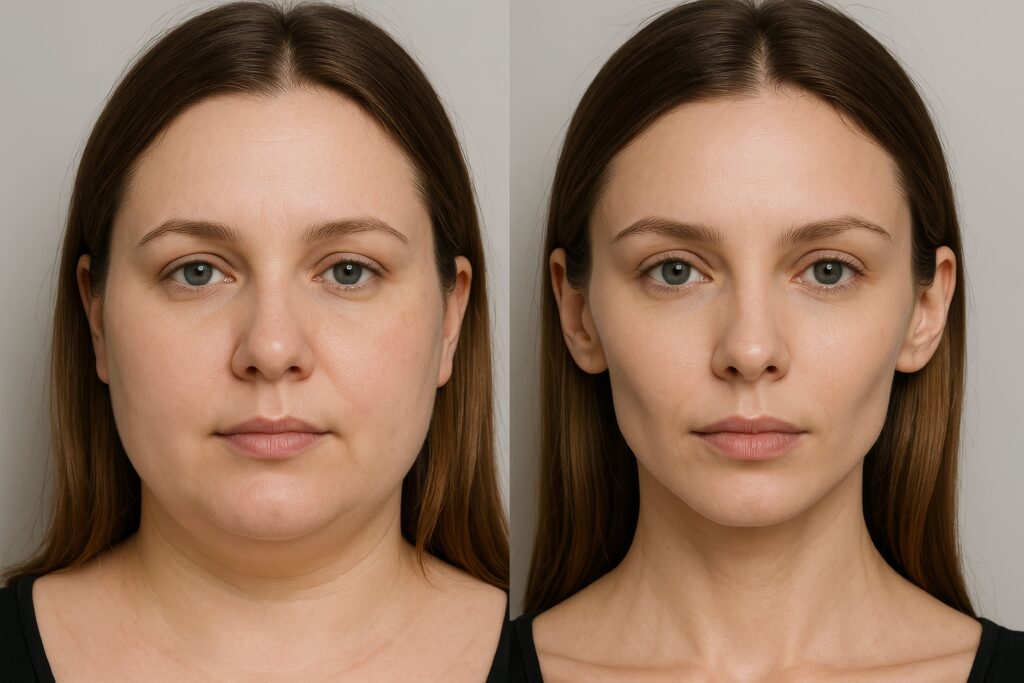
Many people celebrate the physical and health benefits that come with losing weight. However, one common concern is how the face after weight loss can look noticeably different. Rapid fat loss, particularly from medication-assisted weight loss or intensive dieting, can cause facial volume loss after weight loss, making the face appear hollow, tired, or prematurely aged.
These weight loss face changes occur because the face naturally contains fat pads that support skin and maintain youthful contours. When body fat reduces quickly, the face often loses volume too. This can lead to sagging skin after weight loss, deeper lines, and hollow cheeks.
The good news is that several non-surgical aesthetic treatments can help restore balance and rejuvenate the face. In this guide, we explain why facial changes occur after fat loss and explore safe treatment options such as dermal fillers, skin boosters, polynucleotides, and microneedling.

Why Does the Face After Weight Loss Change?
Weight loss impacts the entire body, including the face. Facial structure relies on layers of fat, muscle, and skin to maintain shape and firmness.
When weight is lost rapidly, these layers can shift.
Several factors contribute to facial volume loss after weight loss.
Loss of Facial Fat Pads
The face contains natural fat compartments that support the skin and maintain youthful contours. These include fat pads in areas such as the cheeks, temples, and around the eyes.
When significant weight loss occurs, these fat pads shrink. This can lead to:
- Hollow cheeks
- Sunken temples
- More visible bone structure
- Increased shadowing under the eyes
This is one of the primary reasons people notice dramatic weight loss face changes.
Reduced Skin Elasticity
Skin elasticity depends on collagen, elastin, and hydration levels.
As we age, collagen production naturally slows. When weight loss occurs quickly, the skin may not tighten fast enough to adapt to the new facial shape.
This often leads to sagging skin after weight loss, particularly around:
- The jawline
- The lower cheeks
- The neck
People who lose a large amount of weight quickly may notice the skin appearing looser or less firm.
Changes to Facial Proportions
Facial balance depends on volume distribution.
When volume decreases unevenly across the face, the proportions can change. For example:
- Cheeks may appear flatter
- Smile lines may deepen
- Jawline definition may reduce
These subtle changes contribute to the overall appearance of a tired or aged face after weight loss.
What Is “Ozempic Face” and Why Is It Being Discussed?
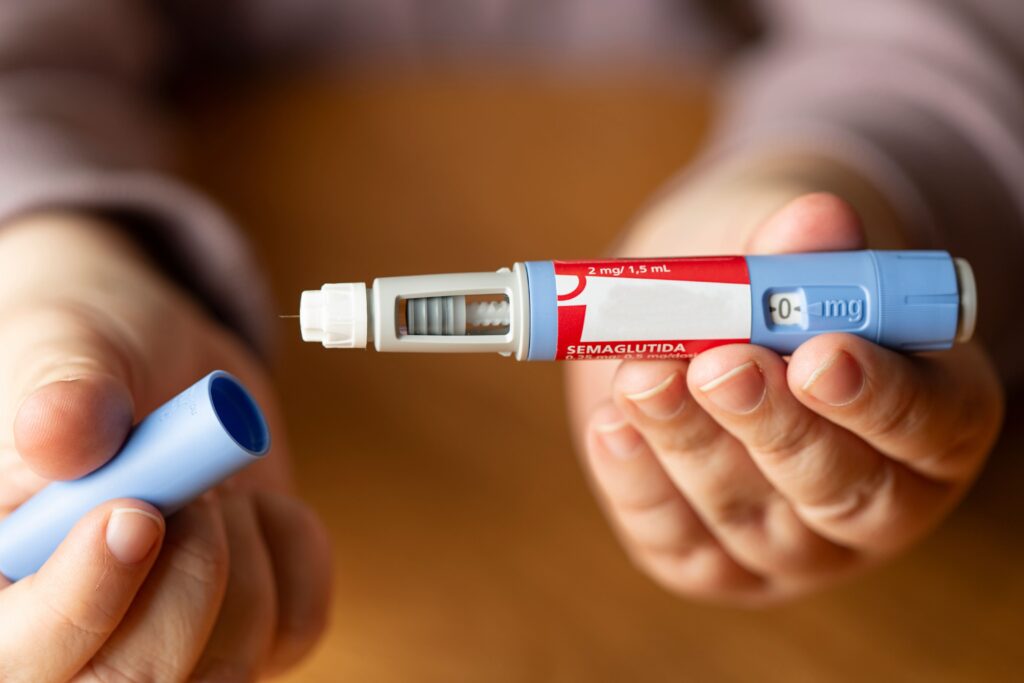
The term “Ozempic face” has recently become popular in discussions about weight loss medications.
It refers to facial volume loss that can occur after rapid weight reduction associated with medications used for diabetes and weight management.
While the medications themselves do not directly change facial structure, rapid fat loss can exaggerate the appearance of ageing in the face.
Common features associated with this trend include:
- Hollow cheeks
- Deeper smile lines
- Loose skin around the jaw
- Tired or sunken eyes
These effects highlight how important facial fat is for maintaining youthful contours.
What Are the Most Common Weight Loss Face Changes?
People often notice similar facial changes following significant weight loss.
These may include:
- Facial volume loss after weight loss
- Sagging skin after weight loss
- Hollow cheeks
- More visible wrinkles
- A thinner appearance around the lips
While these changes are natural, many individuals seek treatments to restore facial balance and confidence.
Which Treatments Can Improve the Face After Weight Loss?
Modern aesthetic treatments offer effective ways to restore facial volume and improve skin quality after weight loss.
The best treatment approach depends on the individual’s facial structure and the extent of volume loss.
Below are some of the most commonly recommended options.
How Can Dermal Fillers Restore Facial Volume?
Dermal fillers are one of the most effective treatments for restoring lost facial volume.
These injectable treatments use hyaluronic acid, a substance naturally found in the body that helps retain moisture and support the skin.
Fillers can restore structure to areas affected by facial volume loss after weight loss, including:
- Cheeks
- Jawline
- Chin
- Nasolabial folds
Benefits include:
- Immediate improvement in facial contour
- Natural looking results when performed by trained professionals
- Minimal downtime
For many patients, subtle filler placement can restore youthful facial balance without making the results look artificial.
How Do Skin Boosters Improve Skin Quality?
While fillers replace volume, skin boosters focus on improving hydration and skin quality.
These injectable treatments deliver hyaluronic acid beneath the skin surface, which improves elasticity and hydration.
Benefits include:
- Increased skin glow
- Improved texture
- Better elasticity
This treatment can help improve the appearance of sagging skin after weight loss by strengthening the skin’s structure.
Can Polynucleotides Support Skin Regeneration?
Polynucleotides are an advanced regenerative treatment designed to stimulate skin repair.
They work by encouraging the skin to regenerate and produce collagen naturally.
Benefits include:
- Improved skin elasticity
- Increased collagen production
- Healthier skin structure
Polynucleotides are often used to complement other treatments that address weight loss face changes.
How Does Microneedling Help Tighten the Skin?
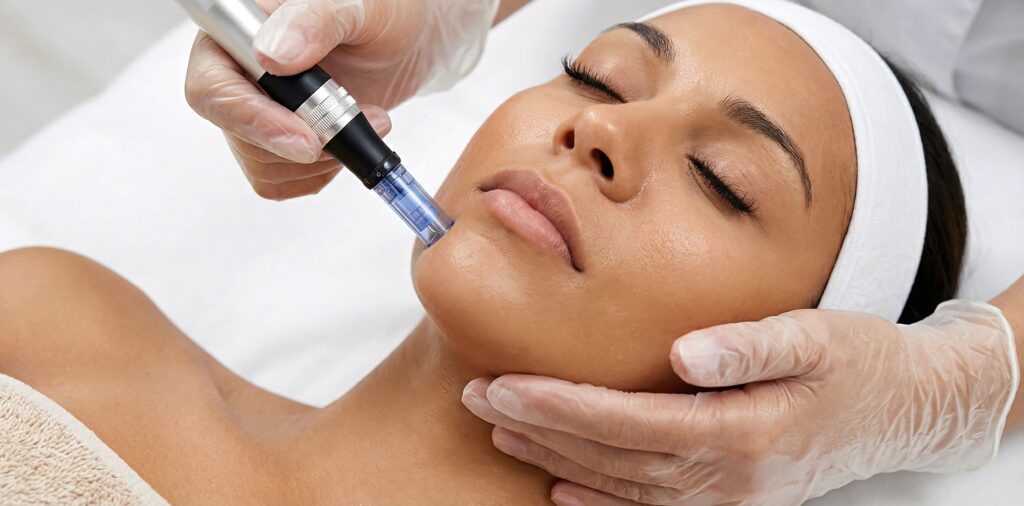
Microneedling is another treatment commonly recommended for improving the skin after weight loss.
The procedure creates controlled micro injuries in the skin that stimulate collagen production.
This can improve:
- Skin firmness
- Skin texture
- Fine lines
For patients experiencing mild sagging skin after weight loss, microneedling can improve skin tightness and overall appearance.
Why Is a Consultation Important After Weight Loss?
Every face is different, which means treatment should always be personalised.
A professional consultation allows our practitioner to assess:
- Facial structure
- Skin elasticity
- Volume loss areas
- Overall treatment goals
Our nurse-led clinic has experience in facial anatomy and can design a treatment plan that restores balance without overcorrecting.
Gradual, subtle improvements typically produce the most natural results.
How Can You Maintain Healthy Skin After Weight Loss?
While treatments can help restore facial balance, healthy habits also support skin quality.
Key practices include:
- Staying hydrated
- Protecting skin from UV exposure
- Maintaining a balanced diet
- Using medical-grade skincare
When Should You Consider Treatment for Facial Volume Loss After Weight Loss?
Many people notice facial changes once their weight stabilises.
This is usually the best time to explore aesthetic treatments.
Treatments performed after weight stabilisation allow practitioners to:
- Assess the final facial structure
- Plan balanced volume restoration
- Achieve long lasting results
If you are noticing hollow cheeks or loose skin following weight loss, a consultation can help determine the most suitable approach.
How Can CKS Aesthetics Help Restore Your Face After Weight Loss?
At CKS Aesthetics, treatments are delivered in a nurse-led clinic environment with a strong focus on safety and natural results.
Our approach focuses on restoring balance rather than dramatically changing your appearance.
Treatments available include:
- Dermal fillers for facial volume restoration
- Skin boosters for hydration and glow
- Polynucleotides for regenerative skin support
- Microneedling for collagen stimulation
Each treatment plan is tailored to your individual facial structure and goals.
Talk To Our Nurses For Advice
If you are concerned about weight loss face changes, booking a consultation can help you explore safe and effective treatment options.
Our team will assess your facial structure and recommend personalised treatments designed to restore natural looking volume and confidence.
Book a consultation today to discuss your options with our experienced practitioners.